When Harry Met Fanny

Harry, Fanny, Fanny, and Harry (left to right)

Pictured in the photo are two couples both named Harry and Fanny. On the left are my cousins from Providence, and on the right are my parents. At one time, the name Fanny was very popular for girls. You may remember the comedienne Fanny Brice who was the subject of the musical and movie Funny Girl.  I must have had at least six relatives named Fanny. It may have a lot of meanings and origins in names including Frances. But “Fanny” has fallen somewhat out of favor among English speakers. Click the player below to hear the Yiddish meaning of my mother’s name, “Fanny.”

Books: Detective Stories and Authors

Detective Stories and Authors

This is one of my favorite genres. I am taking the liberty of providing a list (link above) that I compiled in 2005 of authors (left-hand column) and detectives (middle column), with brief descriptions of the detective and his or her milieu. I put an asterisk next to the authors I particularly enjoyed. I also put an asterisk next to names such as Dorothy Sayers, Margery Allingham, Agatha Christie (forgive!) and Ngaio Marsh because they represent early 1930s and 1940s English women mystery writers. So the asterisk system is somewhat flawed. However, if you see two asterisks, those are the authors whose books I particularly enjoyed. For instance the character Hamish McBeth (M.C. Beaton), and the Joan Hess series about Arly Hanks in the small town of Maggody, Ark. Arthur Upfield’s Australian Aborigine detective series was great also.

If I knew of movies or TV series, I indicated that in some notes. I did catch a mistake–and you will see a hand-written note: Donald Westlake, and not Carl Haissen, wrote the Archy McNally stories about an investigator living with his parents in Palm Beach, Fla.

Josephine Tey was inexplicably omitted from the list. The Daughter of Time is one of my favorite books..

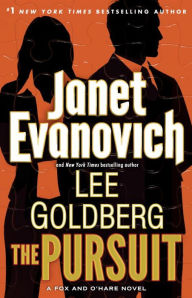
I am sure I have forgotten to put asterisks on some of the books that I have loved, but I never fool myself into thinking that my taste in literature (or anything else for that matter) will correspond to anyone else’s. If I can lead you to a fun read or two, then the list is worth it. And of course, it needs updating with the contemporary detective stories of the last decade and beyond, such as the anticipated title below.

9780553551549_p0_v2_s192x300

Holy Shidduch!

A “shidduch” is a match made for an arranged marriage. Click the player below to hear it used in a typical sentence…

Matzoh Brei (Fried Matzoh): A Kitchen Tradition

IMG_0869R

Matzoh brei is Jewish French toast. It could be served as a sweet dish with jam or syrup or as a savory dish. I definitely prefer to use salt and pepper for a savory flavor.

Here’s how my mother used to make it, so of course, this is how I continue to make it. If I have to break the matzoh I will, but only in half. I try not to break it up. First, I quickly soften the matzoh in boiling water, most of which I try to pour off or squeeze out. You can use an 8 x 8-inch cake pan for this. After the matzoh is softened, it’s dipped into beaten egg (perhaps with a titch of water so it’s not too eggy). Some cooks put sugar in but I do not. Next, fry it in a melted spry. This is what my mother used, something that is light enough so that no other flavor is introduced into the matzoh and egg mixture as it fries. Or you could use butter or oil. Fry both sides. Keep cooked pieces warm in a slow oven as you fry more. If the matzoh breaks into smaller pieces, that’s okay, just lay several pieces close together in the frying pan so you have a nice sized piece of matzoh segment to fry and serve. I try to get nice whole matzoh “slices”.  I noticed that name-brand matzoh is thicker than the more delicate Israeli matzoh and the thicker products will be easier to fry without breaking. But I don’t believe there is any particular right or wrong way to do this. However you as the chef decide to make the dish will become your own way of making matzoh brei. Make your own kitchen tradition.


Carpe Diem in Yiddish

There are so many ways to say it. The Amish say, “We get too soon old and too late smart.” How true that is for me. I never felt I was good enough and I was always afraid to do things. And now I am too old to do stuff. Now I’m brave when it’s too late. So you must “Seize the day!” How would we say this idea in Yiddish? Click on the player below to hear what I told my daughter…

“The Sidewalks of New York”

B66 PNG

“East side, West side, all around the town…” You know that famous song from 1890s? For our 50th wedding anniversary, my daughter made a film of my husband and me singing songs of the Gay ’90s. Here is a clip…


Books: Brian Moses

th

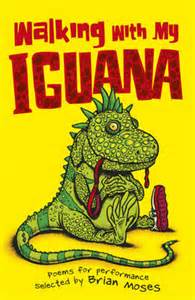
My favorite children’s poet is Brian Moses. You won’t believe his delightful poem called “Walking with My Iguana.” Apparently he saw someone walking their pet iguana on a leash, or as they say “lead,” at the English seaside and was inspired. He is also a teacher and wrote a poem called “Behind the Staffroom Door,” a tale of attrition of “ten tired teachers.” And that reminds me, he is also a percussionist. Why should the children have all the fun?

http://www.brianmoses.co.uk/

http://www.poetryarchive.org/poem/walking-my-iguana


Fred Allen Radio Show

Fred Allen, left, and cast.

I loved Fred Allen, who had a radio show. His humor was witty and somewhat subtle, not just one gag after another. I loved him but my mother didn’t. He had a bit called Allen’s Alley where he would walk down the hall (and here is where radio shines–you could image him walking down a corridor in a building just like yours). Anyway, he would knock on doors and various characters would appear. For instance, one was a Southern blow hard named Senator Claghorn. (“Ah say, I said, I will neva go to Yankee Stadium!”) My daughter tells me this is the basis of a cartoon character, Foghorn Leghorn.

Well one of the occupants of Allen’s Alley was Mrs. Nussbaum, an obviously Jewish character with a Yiddish accent, played by the wonderful Minerva Pious. (“Who stole mine stole?”) I thought this was hilarious. But my mother never liked anything where they made fun of Jewish people. She took umbrage. My mother hated Mrs. Nussbaum and anything that was a take-off, travesty, or stereotype.

But Minerva Pious was delightful. Click on the player below to hear her as Mrs. Nussbaum on the Fred Allen Show, May 26, 1946. You will have to decide if it is offensive or funny, or both.

“Getzel Vert a Khoosin”

From the New York Public Library Yiddish Theater Collection

The very first live play that I went to see happened to be a musical, in the Hopkinson theater in Brownsville. I had never been to the theater in my life. I was about 10. My mother and father took me. It was a Yiddish play with Menasha Skulnik called Getzel vert a khoosin (Getzel Becomes a Bridegroom). I was so amazed. There were people singing and dancing and hulyan on stage. And I knew they were telling funny stories because everyone in the audience was laughing their heads off. That was the first time I had been to a play and I didn’t know very much Yiddish at the time. I never forgot it. I had been to the movies before. But I knew immediately that this was not like going to the movies. This was real life. It was the beginning of my awakening to the outside world.

Check this out: http://digitalcollections.nypl.org/collections/yiddish-theater-collection#/?tab=about